Zur Startseite Zur Hauptnavigation Zum Inhalt Zum Kontakt Zur Suche Zur Sitemap
+A-
ENDE
  Menü
Interdisziplinäres Zentrum für Klinische Forschung
  Menü
  • Startseite
  • Vorstand
  • Mitglieder
  • IZKF-Beirat
  • Nachwuchsförderprogramme
    • Graduiertenprogramme
      • IZKF Graduate Program Experimental Medicine
      • Jena School for Ageing Medicine (JSAM)
      • Reisebeihilfe (Travel grant)
      • EKF Promotionskolleg AURA
    • Clinician Scientists
    • Advanced Clinician Scientists
    • Medical Scientists
    • Advanced Medical Scientists
    • Qualifizierungsprogramm
    • Mentoring
    • Bisherige Programmförderung
    • Alumni
  • Summer School Molecular Medicine
  • Graduiertenstipendium der Novartis-Stiftung
  • Core Units
  • Aktuelles
  • Veranstaltungen
  • Hauptmenü
    • Patienten & Angehörige
    • Forschung
    • Lehre & Studium
    • Ärzte & Zuweiser
    • Kliniken & Institute
    • Uniklinikum Jena
    • Beruf & Karriere
IZKF
  • Startseite
  • Vorstand
  • Mitglieder
  • IZKF-Beirat
  • Nachwuchsförderprogramme
    • Graduiertenprogramme
      • IZKF Graduate Program Experimental Medicine
      • Jena School for Ageing Medicine (JSAM)
      • Reisebeihilfe (Travel grant)
      • EKF Promotionskolleg AURA
    • Clinician Scientists
    • Advanced Clinician Scientists
    • Medical Scientists
    • Advanced Medical Scientists
    • Qualifizierungsprogramm
    • Mentoring
    • Bisherige Programmförderung
    • Alumni
  • Summer School Molecular Medicine
  • Graduiertenstipendium der Novartis-Stiftung
  • Core Units
  • Aktuelles
  • Veranstaltungen
IZKF / Nachwuchsförderprogramme / Graduiertenprogramme / IZKF Graduate Program Experimental Medicine

Graduierten-Programm Experimental Medicine

Ziel/ Aim

The Graduate Program Experimental Medicine aims at creating a high standard training and supervision program for doctoral candidates of the Medical Faculty. The program allows broad qualification in topics of molecular and experimental medicine and will familiarize students with modern laboratory techniques. Language and soft skill courses, including the training of communication, presentation, and public speaking, will also be provided. The doctoral studies are supervised by a thesis committee and documented in annual research reports.

The Graduate Program Experimental Medicine belongs to the JSMM (Link JSMM), which in turn is a member of the Jena Graduate Academy (JGA). The JSMM coordinates four graduate programs: the

  • the Graduate Program Experimental Medicine,
  • the Jena School for Ageing Medicine (Link JSAM),
  • the GRK 2155 "ProMoAge" (Link GRK 2155 - ProMoAge)
  • and the Leibniz Graduate School on Aging and Age-Related Diseases (LGSA) (Link LGSA).

The Graduate Program Experimental Medicine is open to doctoral students of life sciences and medicine coming from different research groups of the Medical Faculty.

Anforderungen / Requirements

Anforderungen/Requirements

Doctoral students are expected to participate in the activities of their respective groups and departments, to attend the announced lecture series and progress reports, to complete method and soft skill courses, to have regular meetings with their thesis committees, and to submit annual reports about their work. It is the responsibility of the doctoral student to call the committee meetings.

The thesis committee for PhD students consists of the project leader plus two group leaders or senior postdocs outside the group of the project leader. For medical students 2 thesis committee members are required. The supervisor and the thesis committee will monitor the quality and progress of the PhD project. The committee will advise and help the PhD student and sort out potentially occurring disagreements. The committee can be contacted whenever appropriate or necessary.

The tables below announce the requirements that have to be met to receive a certificate of the Graduate Program Experimental Medicine at the end of the doctoral studies. The participants need to complete all mandatory events or tasks and in addition two (PhD) or one (MD) out of six elective activities per year. The participation in the different events and the different activities has to be listed and to be confirmed by the project leader. The sum of the required activities per 3 years corresponds to 21 ECTS points for PhD students and 7 ECTS points for MD students (ECTS = European Credit Transfer System).

Anmeldung / Registration

Anmeldung/Registration

Doctoral students need to:

  • register in the university’s doc-in system (www.uni-jena.de/doc-in)
  • apply for the admission as a doctoral student at the Medical Faculty or at the Faculty of Biology and Pharmacy (http://www.uniklinikum-jena.de/Studium/Medizinische+Fakult%C3%A4t/Akademische+Verfahren/Promotion/Antragsformulare.html; https://www.bio.uni-jena.de/en/graduate-studies-habilitation-office)
  • fill in and have the supervision agreement signed, which has to be sent to the coordinator of the Graduate Program Experimental Medicine () (see downloads)

Vorlesungen / Lecture Program

Vorlesungen/ Lecture Program

Currently lectures will take place in person at specified location on indicated dates (Thursdays), from 16:00 - 17:30.

Lecture 2025

Date

Place

Topic Referent

23.01.2025

SR-10 F2.U1 Heavily studies but full of suprises: respiratory cI as the Na+/H+ antiporter Prof. Dr. Jose Enriquez

27.02.2025

HS 2 FACS and CyTOF new diagnostic tools PD Dr. Christian Kosan

17.03.2025

HS 2

JSMM Minisymposium - Personalized Medicine in Oncology


10.04.2025

HS 2

Hearing across the lifespan: Mongolian gerbils as a model Prof. Dr. Georg Klump

15.05.2025

HS 2 Hippo Signaling-driven Lung Fibrosis by Influenza A Virus Infection in Lung Fibroblast  PD Dr. Stefanie Deinhardt-Emmer

11.06.2025

HS 2 JSMM Minisymposium - Perspectives on Sex and Gender in Medicine  

26.06.2025

HS 2 Machine-learning based histo-molecular assessment of treatment response in ulcerative colitis - a real-life cohort study Dr. Matthias Friedrich

11.09.2025

HS 2 Simple applications of fluorescence imaging Dr. Amod Godbole

16.10.2025

HS 2 tba  

06.11.2025

HS 2 tba  

27.11.2025

HS 2 JSMM Minisymposium  

Lecture Archive

Lecture 2024

Date

Place

Topic Referent

25.01.2024

SR-10 F2.U1 Methods to study transcriptional regulation Prof. Dr. Otmar Huber

22.02.2024

Oval Office Why do we need reliable sepsis experimentation? Prof. Dr. Ralf Claus

21.03.2024

SR-10 F2.U1

In vitro and in vivo Methods for Hematogenous Metastasis Research at the Institute of Anatomy I in Jena

Prof. Dr. Tobias Lange

25.04.2024

SR-1, Seminar-

container

The mechanism(s) of Ras activation - two decades of surprises surrounding the regulation of the most potent human proto-oncoprotein Prof. Dr. Ignacio Rubio 

06.06.2024

SR-10 F2.U1 Neuronal networks: Development, plasticity and pathomechanisms Prof. Dr. Britta Qualmann

19.09.2024

SR-10 F2.U1 What is Health Services Research and How Can It Help Integrate Medical Research Findings into Everyday Care Prof. Dr. Verena Vogt

07.11.2024

HS 2 Enhancing interpretation of omics data - interactivity meets reproducibility Dr. Federico Marini 
       

Lecture 2023

Date

Place

Topic Referent

12.01.2023

Oval Office

In vivo imaging

Prof. Dr. Knut Holthoff

09.02.2023

Oval Office

Parenchymal Immunity in Life-Threatening Infections Jun.-Prof. Dr. Adrian T. Press

09.03.2023

Oval Office

Influenza viruses – a challenge for host response, prophylaxis and treatment Prof. Dr. Michaela Schmidtke

13.04.2023

SR-10 F2.U1

Biologically active implants for infection prophylaxis Prof. Dr. Britt Wildemann

11.05.2023

Oval Office

Dissecting mechanisms of host-pathogen interaction in organ-on-chip PD Dr. Alexander Mosig

22.06.2023

Oval Office

Transgenic mouse models Dr. Christopher Hennings

14.09.2023

online (Zoom)

Novel techniques for the detection of transcription factor binding in eukaryotic cells Dr. Tino Schenk

12.10.2023

Oval Office

Simple applications of fluorescence imaging Dr. Amod Godbole

09.11.2023

SR-10 F2.U1 Embryonic and adult stem cells derived in vitro models for research Prof. Dr. Maria Wartenberg

07.12.2023

SR-10 F2.U1 Applying bioinformatics to identify host factors of viruses from screening data Prof. Dr. Rainer König

Lecture 2022

Date  Topic Referent

13.01.2022

Cytokine receptors – Biochemistry and pathobiochemistry

Prof. Dr. Karlheiz Friedrich

10.02.2022

Good Scientific Practice

Dr. Hendrik Huthoff

10.03.2022

Mucosal-associated invariant T (MAIT) cells in fungal infections

Dr. Susanne Jahreis

07.04.2022

Regulation of Ras activity and signaling: Where are we 40 years after the discovery of the first oncogene?

Prof. Dr. Ignacio Rubio

12.05.2022

Stable genetic manipulation of mammalian cells

PD Dr. Jörg Müller

23.06.2022

Defining drug targets in disease

Prof. Dr. Aria Baniahmad

10.11.2022

Quantitative mass spectrometry-based proteomics for biomedical research

Prof. Dr. Florian Meier-Rosar

Lecture 2021

Date Topic Referent

14.01.2021

How to measure brain perfusion in rodents and humans? - A journey through imaging methods in a translational context

Dr. Alexander Jörk

11.03.2021

Analyses of eukaryotic gene regulation Dr. Tino Schenk

15.04.2021

Live-cell fluorescence imaging using high-resolution microscopy Dr. Amod Godbole

26.05.2021

The amyloid cascade – is the model still valid for Alzheimer’s disease?

Prof. Dr. Dr. Christian Haass

(Ludwig-Maximilians-Universität München)

17.06.2021

JSMM Minisymposium on Autophagy

Prof. Dr. Judith Klumperman (University Medical Center Utrecht)

Prof. Dr. Tassula Proikas-Cezanne (Eberhard Karls University Tübingen)

Prof. Dr. Christian Hübner

15.07.2021

Immuno-oncology: clinical and translational perspectives

Prof. Dr. Ulrich Hacker (Leipzig University Medical Center)

17.08.2021

COVID-19 as a systemic disease Dr. Stefanie Deinhardt-Emmer

09.09.2021

Sepsis and its models in translational medicine Prof. Dr. Ralf Claus

07.10.2021

FACS and CyTOF new diagnostic tools

PD Dr. Christian Kosan

04.11.2021

Phosphorylation-deficient G-protein-biased μ-opioid receptors improve analgesia and diminish tolerance but worsen opioid side effects Dr. Andrea Kliewer

02.12.2021

Neural stem cells and adult neurogenesis in Neuroscience research PD Dr. Silke Keiner

Lecture 2020

Date Topic Referent

16.01.2020

Translational nanotechnology

Dr. Adrian Press

13.02.2020

Genetically-encoded fluorescent sensors – principles and applications

PD Dr. Roland Schönherr

12.03.2020

Respiratory viral diseases - an overview of pathogens and diagnostics

Dr. Stefanie Deinhardt-Emmer

16.04.2020

cancelled due to COVID-19

-

14.05.2020

cancelled due to COVID-19

-

11.06.2020

Organ on Chip: novel tools in biomedicine

PD Dr. Alexander Mosig

09.07.2020

Mental health during the doctorate

Dr. Hendrik Huthoff

13.08.2020

Research data management

Dr. Volker Schwartze / Dr. Bettina Färber

03.09.2020

Molecular mechanisms in autoimmune encephalitis – New translational research approaches

Dr. Holger Haselmann

08.10.2020

Investigating muscle stem function

Dr. Julia von Maltzahn

05.11.2020

Computational Epigenomics

Prof. Dr. Steve Hoffmann

03.12.2020

Multi-color-flow cytometry and Mass Cytometry (CyTOF) - new ways to get the most out of your cells

PD Dr. Christian Kosan

Lecture 2019

Date Topic Referent
20.01.2019 Flourenscence microscopy applications: from cellular signal transduction to medical applications Prof. Dr. Carsten Hoffmann
07.03.2019 Molecular Cloning PD Dr. Jörg Müller
04.04.2019 Transgenic Mouse Models Dr. Chirstopher Hennings
28.04.2019 Lipidomics Prof. Dr. Andreas Koeberle
02.05.2019 Life Cell Imaging Dr. Amod Gobole
22.08.2019 Analysis of gene regulation by reporter gene approaches  - Principles and applications in current research Prof. Dr. Karl-Heinz Friedrich
19.09.2019 Behavioural studies in mice Dr. Anja Urbach
17.10.2019 Functional analysis of gene regulation Dr. Tino Schenk
14.11.2019 Molecular cloning and application of Crisp / Cas 9 techniques Prof. Dr. Ralf Mrwoka

Lecture 2018

Date Topic Referent
22.02.2018  I/2018 - Start of new program in 2018 Prof. Dr. Regine Heller
22.03.2018 II/2018 - "Mass spectrometry based proteomics" Dr. Alessandro Ori, FLI
19.04.2018 III/2018 - "The CRISPR/Cas9 way - the new toolbox for molecular biologists" Prof. Dr. Jörg Müller
24.05.2018 IV/2018  -"Fluorescence microscopy" Dr. Ralf Schmauder
31.05.-01.06.2018 IZKF Retreat Graduate Program Experimental Medicine in Oberhof  
14.06.2018 V/IZKF-Lecture and RTG 1715-Lecture "Basics of Epigenetics" Dr. Holger Bierhoff
25.10.2018

Multi-color-flow cytometry and Mass Cytometry (CyTOF) - new ways to get the most out of your cells

Dr. Christian Kosan
06.12.2018

IZKF- biostatistics course

Prof. Dr. 

André Scherag

Lecture 2017

Date Topic Referent
12.01.2017 "Protein kinases and protein phosphatases as targets of anti-cancer drugs" Prof. Dr. Frank Böhmer
26.01.2017 "New techniques of genome editing" PD Dr. Jörg Müller
09.02.2017  RTG 1715 guest lecture „Immune system and tissue radiobiology“ Prof. Dr. Claudia Fournier
23.02.2017  "Virus/host interactions in picornavirus-infected cells" Prof. Dr. Andreas Henke
09.03.2017  "The energy of cancer" PD. Dr. Ignacio Rubio 
22.03.2017  RTG 1715 guest lecture “Insights into (1→3,1→6)-b-glucans in innate immunity” Prof. David L. Williams, Tennessee State University
06.04.2017  General Skills P. Wagner
20.04.2017 Cancelled - RTG1715 guest lecture "Radiation-induced normal lung damage: from tissue responses to novel treatment concepts" Prof. Verena Jendrossek University Duisburg/Essen
04.05.2017 "Tumor cell phenotype transitions: tumor progress and therapy resistance" Prof. Dr. Alexander Berndt 
18.05.2017 "Signal transduction of cytokine receptors – biochemistry and pathobiochemistry" Prof. Dr. K. H. Friedrich
01.06.2017 "Lipid signalling in inflammation" Prof. Dr. Markus Gräler
15.06.2017 RTG 1715 guest lecture,  "Relevance of hormesis in learning and memory: from physiology to Alzheimer's disease"  Prof. Daniela Puzzo, University of Catania, Italy 
29.06.2017 "Epigenetic alterations in leukemia as a basis for novel therapies" PD Dr. Thomas Ernst 
13.07.2017 "Nuclear hormone receptors in molecular medicine" Prof. Dr. Aria Baniahmad
27.07.2017 "Seed and soil: targeting the interaction between tumour cells and microenvironment as a way to treat cancer. The myeloma example." Dr. Annamaria Brioli
10.08.2017 "Introduction into electrophysiology" PD Dr. Roland Schönherr 
24.08.2017 "Killing two birds with one stone - targeting the fatal interplay of influenzaviral and pneumococcal neuraminidases by dual acting inhibitors"  PD Dr. Michaela Schmidtke 
07.09.2017 General skills P. Wagner
21.09.2017 Fluorescence Correlation Spectroscopy and Related Techniques Dr. Ralf Schmauder
05.10.2017 Introduction to Photoshop and Scientific Illustrations  Kalla Pavan Kumar
19.10.2017 RTG 1715 guest lecture (to be defined later)

Prof. Hans Reul, University of Bristol

02.11.2017 "Identification of gene regulatory factors"  Dr. Tino Schenk 
16.11.2017 to be defined later  Prof. Dr. Verena Jendrossek, Sprecherin GRK 1739, Institut für Zellbiologie (Tumorforschung), Duisburg / Essen
30.11.2017 General skills P. Wagner 

Fortschrittsberichte / Progress Reports

20.06.2024 - Progress Reports PhD fellows

16:00

Özge Candemir (Department of Neurology)

The Role of Glia Cells and Complement Signaling Pathway in Sepsis-Associated Encephalopathy (SAE)

16:30

Hannah Klink (Department of Neurology )

Attentional functions and brain connectivity in age-related cognitive decline

17:00

Raphaelle Petit (Department of Neurology)

Age-dependent gut-brain interactions in mice: modulation by physical activity

27.06.2024 - Progress Reports MD fellows

16:00

Auron Qalaj (Department of Anesthesiology and Intensive Care Medicine)

tba

16:30

Hannah am Ende (Department of Neurology )

tba

17:00

Emma Kaufmann (Institute of Physiology II)

tba

* the Zoom link for the meeting will be sent via email to IZKF fellows, interested researchers from other programs/department can get it upon request by contacting:

Methodenkurs / Method Courses

Methodenkurse/Method courses

Within the graduate program Experimental Medicine, method courses and individual lab visits to address questions about specific methods will be offered and can be chosen according to the respective needs of doctoral students. The participating groups dispose of a broad spectrum of techniques from cell biology, microscopy, protein analysis, molecular biology, bioinformatics and animal experiments and will share their expertise with interested doctorands.

Method courses on demand will be organized by the program if a group of 4-5 participants is interested in a specific method. The doctoral students should then contact the coordinator of the program, Prof. Regine Heller.
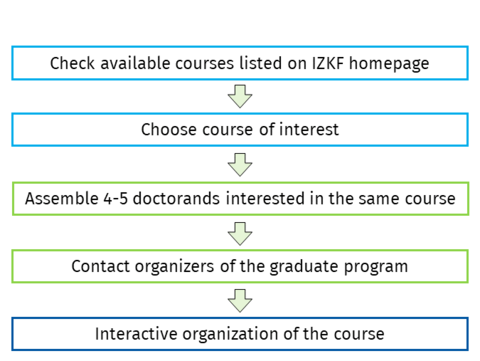
 

Available options are currently under revision and will be listed here soon.

PhD-Stellengesuche - und angebote

PhD-Stellensuche und -angebote

PhD-Angebote/PhD offers

Call for applications

There are no open positions at the moment.

For more information please contact Prof. Regine Heller (phone: 03641-9 39 56 33 or email: )

Downloads

Downloads

- Supervision agreement (hier)

- Template Annual Report (hier)

- Logbook (hier)

All other necessary documents will be handed over pesonally after your registration.

Startseite Nachwuchsförderprogramme Aktuelles
Vorstand Summer School Molecular Medicine Veranstaltungen
Mitglieder Graduiertenstipendium der Novartis-Stiftung
IZKF-Beirat Core Units
Impressum
Datenschutz
zur Friedrich-Schiller-Universität Jena
zum Verband der Universitätsklinika Deutschlands
zur Aktion Thüringen weltoffen
zum Patient Blood Management
zum Krankenhausspiegel Thüringen