
WATCH – Web-Based Telemedicine Approach for Treatment of Post-COVID-19 in Thuringia
Funding period: 07/2023-08/2026
Funding code: 01NVF22114


Funding period: 07/2023-08/2026
Funding code: 01NVF22114
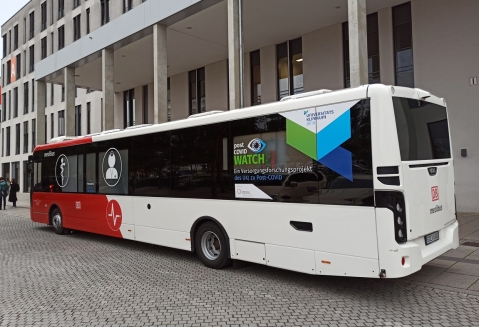
The aim of WATCH is to develop and evaluate a new form of care for post-COVID patients, especially in rural areas, to improve symptoms and enable higher social participation. In a mobile post-COVID outpatient clinic (PoCo bus), patients are examined close to their place of residence, followed by a multimodal telemedical intervention. Over a period of twelve weeks, participants complete training units focusing on cognitive functioning such as concentration and attention (BRAIN module), a program on physical fitness and activity (BODY module) and behavioral therapy (SOUL module). Further information can be found here.
This part of the process evaluation aims to capture the perspective of general practitioners (GPs) regarding the feasibility, benefits and acceptance of the intervention. This will involve both qualitative and quantitative surveys.
At the beginning of the intervention phase, participating GPs will be surveyed using semi-structured interviews. These interviews will provide early insights into the project processes, identifying barriers and facilitators for patient inclusion, and enabling adjustments to be made to (communication) processes as the project progresses. The results of the interviews will also be used to develop a questionnaire for the quantitative assessment of satisfaction, feasibility and acceptance. This will be distributed out to all doctors participating in the WATCH project at the end of the intervention period for the final evaluation. The results will be used to prepare for the continuation of the new form of care.
Project team:
The health economic evaluation of the new form of care WATCH is an important complement to the evaluation of clinical effectiveness, conducted at Martin Luther University Halle-Wittenberg. It follows the main idea that early, structured interventions can improve the physical, cognitive and psychological symptoms of the study participants, increase the chances of a full recovery and reduce the likelihood of chronicity. The health economic evaluation is based primarily on claims data from three statutory health insurance funds participating in the project and aims to answer the following questions:
(1) Does the intervention reduce healthcare costs?
(2) Does the intervention reduce the number of days of incapacity for work?
The results of the health economic evaluation will provide one important basis for the G-BA's decision on whether to transfer this form of care into standard care.
Project team:
UKJ Press Release from Nov 12, 2024