
Zur Startseite Zur Hauptnavigation Zum Inhalt Zur Suche Zur Sitemap
+A-
ENDE
  menu
Institut für Humangenetik
  menu
  • Homepage
  • General Information
  • Fields of work
    • Functional Genetics
    • Molecular Genetics
      • Co-workers
      • Methods
      • Publications
    • CCB Lab
    • Molecular Hematology
    • Molecular Cytogenetics
    • Molecular Genetic Diagnostics
    • Transplant Immunology
    • Tumor Cytogenetics
    • Cytogenetics - Karyotype evolution
    • Single-cell-sequencing
    • LSM high-resolution microscopy
    • IncuCyte Zoom System
    • Optical Genome Mapping (OGM)
  • Clinical diagnostics
  • Genetical counseling
  • Diagnostic accompanying letters
  • Teaching
  • Databases
  • Publications
  • Model Project Genome Seq
  • Main menu
    • Patients & Relatives
    • Research
    • Teaching and study
    • Doctors & Referrers
    • Clinics & Institutes
    • Careers
    • University Hospital
Institute of Human Genetics
  • Homepage
  • General Information
  • Fields of work
    • Functional Genetics
    • Molecular Genetics
      • Co-workers
      • Methods
      • Publications
    • CCB Lab
    • Molecular Hematology
    • Molecular Cytogenetics
    • Molecular Genetic Diagnostics
    • Transplant Immunology
    • Tumor Cytogenetics
    • Cytogenetics - Karyotype evolution
    • Single-cell-sequencing
    • LSM high-resolution microscopy
    • IncuCyte Zoom System
    • Optical Genome Mapping (OGM)
  • Clinical diagnostics
  • Genetical counseling
  • Diagnostic accompanying letters
  • Teaching
  • Databases
  • Publications
  • Model Project Genome Seq
Institute of Human Genetics / Fields of work / Molecular Genetics

The normal prostate and prostate cancer:

An androgen and androgen receptor responsive organ and cancer


Goal: Understand androgen action in normal differentiation and in castration resistance to reduce therapy resistance

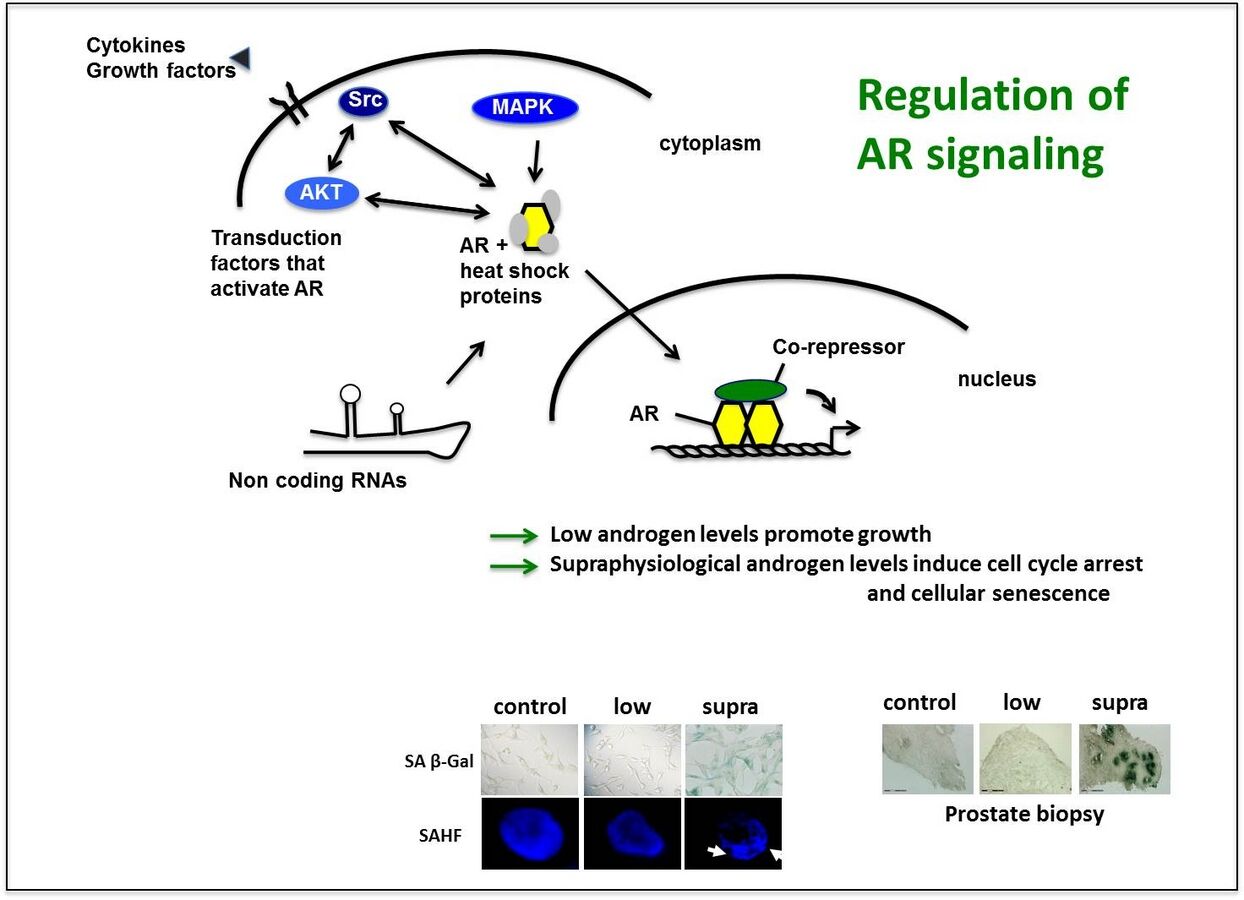
The androgen receptor (AR) promotes the growth and differentiation of the normal prostate.

Prostate hyperplasia and prostate cancer are both also under control of AR-signaling.

The AR regulates also muscle function and other male specific sexual differentiation.

The AR is a member of the steroid receptors belonging to the nuclear hormone receptor superfamily. The AR is activated by androgen binding leading to its nuclear localisation, binding to chromatin and control of gene expression. The liganded AR has also regulatory function in the cytoplasm. The AR can also be activated by signal transducers that phosphorylate the AR. The strength of AR-signaling is also controlled by AR protein stability, subcellular localisation and the interaction with many other factors not only on chromatin.

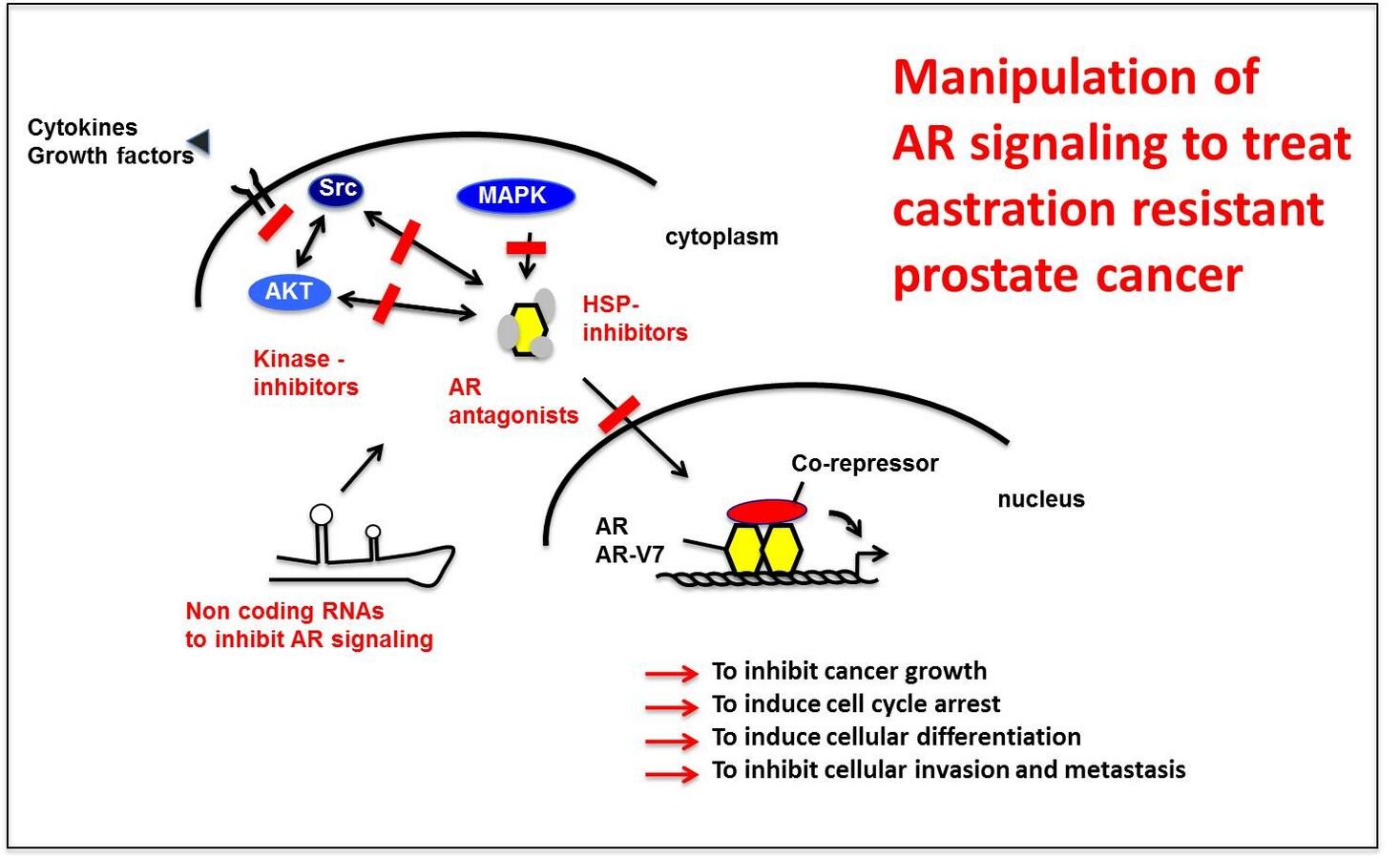
The dysrgulation of AR-signaling in prostate hyperplasia and therapy resistant prostate cancer is not fully understood. Understanding in detail the AR function and dysregulation of AR-signaling in diseases will help to develop specific drug targets.
Homepage Genetical counseling Publications
General Information Diagnostic accompanying letters Model Project Genome Seq
Fields of work Teaching
Clinical diagnostics Databases
Europäischer Sozialfonds
Europäische Union - Sozialfonds
TMWWDG
EFRE-EU
Akkreditierungsurkunde Instititut für Humangenetik
Akkreditierungsurkunde Praxis für Humangenetik - ZAM