


Junior Research Group J. Leonhardt
Our research focuses on critical care medicine, cholestatic diseases, liver failure, and circulating bile acids.
Bile Acid Research
Bile acids are amphiphilic molecules synthesized by the liver to facilitate the digestion of dietary fats. However, the discovery of bile acid receptors has fundamentally changed our understanding of bile acids: in addition to their role in lipid digestion, bile acids also act as signaling molecules.
One of the most important bile acid receptors is the Takeda G protein-coupled receptor 5 (TGR5, also known as GPBAR1). The binding of bile acids to TGR5 leads to significant suppression of proinflammatory immune functions, particularly in monocytes and macrophages. The potency of individual bile acids in activating TGR5 varies: some bile acids are potent activators of TGR5-mediated immune modulation, whereas others show only mild effects. However, the effects of the complex bile acid compositions found in humans are not yet understood.
Our research investigates TGR5-mediated effects of naturally occurring bile acid compositions. We study both physiologically and pathologically relevant bile acid compositions found in humans. We recently demonstrated that bile acid compositions that are found in the circulation of many patients with liver failure can activate TGR5. This, in turn, contributes to monocyte dysfunction and is correlated with significantly increased mortality. Bile acid metabolism and TGR5 may represent promising targets for novel therapeutic strategies in liver failure.
Publications
Stallhofer J, Leonhardt J, Semmler J, Neugebauer S, Kiehntopf M, Löhden W, Homeister L, Ungelenk M, Hübner CA, Steube A, Waschina S, Stallmach A. Loss of TGR5-activating bile acids is associated with disease activity in inflammatory bowel disease. Sci Rep. 2026;16(1):22812. DOI: 10.1038/s41598-026-63156-0. https://pubmed.ncbi.nlm.nih.gov/42481656/
Leonhardt J, Schmidt HHJ, Koball S, Dollinger M, Wilms C, Neugebauer S, Kunze J, Kiehntopf M, Hinz, M, Backhus J, Henschel J, Klammt S, Sponholz C, Dominik A, Mitzner S, Stange J, Bauer M, Kortgen A. Artificial liver support effectively removes immunosuppressive bile acids from circulation in patients with severe liver failure: a proof of concept study. Crit Care Explor. 2026 Jun 8;8(6):e1419. doi: 10.1097/CCE.0000000000001419. https://pubmed.ncbi.nlm.nih.gov/42249543/
Krause A, Leonhardt J, von Loeffelholz C, Sponholz C, Sommerfeld O. Comparison of the liver support systems OPAL and ALBUNIQUE in critically ill patients with liver dysfunction. Int J Artif Organs 2026 April 49: 241-249. https://pubmed.ncbi.nlm.nih.gov/41923696/
Leonhardt S, Baumann S, Jurgensen C, Huter L, Leonhardt J. Role of intravenous ketamine in the pathogenesis of secondary sclerosing cholangitis in critically ill patients: perpetrator or innocent bystander? Answers provided by forensic toxicology. Intensive Care Med 2023 49: 1549-1551. https://pubmed.ncbi.nlm.nih.gov/37943301/
Leonhardt J, Dorresteijn MJ, Neugebauer S, Mihaylov D, Kunze J, Rubio I, Hohberger FS, Leonhardt S, Kiehntopf M, Stahl K, Bode C, David S, Wagener FADTG, Pickkers P, Bauer M: Immunosuppressive effects of circulating bile acids in human endotoxemia and septic shock: patients with liver failure are at risk. Crit Care. 2023 Sep 27;27(1):372. doi: 10.1186/s13054-023-04620-5. https://pubmed.ncbi.nlm.nih.gov/37759239/
Leonhardt S, Jürgensen C, Frohme J, Grajecki D, Adler A, Sigal M, Leonhardt J, Voll JM, Kruse JM, Körner R, Eckardt KU, Janssen HJ, Gebhardt V, Schmittner MD; Pa-COVID-19 collaborative study group; Frey C, Müller-Ide H, Bauer M, Thibeault C, Kurth F, Sander LE, Müller T, Tacke F. Hepatobiliary long-term consequences of COVID-19: dramatically increased rate of secondary sclerosing cholangitis in critically ill COVID-19 patients. Hepatol Int. 2023 Dec;17(6):1610-1625. doi: 10.1007/s12072-023-10521-0. https://pubmed.ncbi.nlm.nih.gov/37119516/
Perez Ruiz de Garibay A, Kortgen A, Leonhardt J, Zipprich A, Bauer M. Critical care hepatology: definitions, incidence, prognosis and role of liver failure in critically ill patients. Crit Care. 2022 Sep 26;26(1):289. doi: 10.1186/s13054-022-04163-1. https://pubmed.ncbi.nlm.nih.gov/36163253/
Leonhardt J, Haider RS, Sponholz C, Leonhardt S, Drube J, Spengler K, Mihaylov D, Neugebauer S, Kiehntopf M, Lambert NA, Kortgen A, Bruns T, Tacke F, Hoffmann C, Bauer M, Heller R: Circulating Bile Acids in Liver Failure Activate TGR5 and Induce Monocyte Dysfunction. Cell Mol Gastroenterol Hepatol. 2021 Feb 2:S2352-345X(21)00017-5.
Falkensteiner C, Kortgen A, Leonhardt J, Bauer M, Sponholz C: Comparison of albumin dialysis devices molecular adsorbent recirculating system and ADVanced Organ Support system in critically ill patients with liver failure-A retrospective analysis. Ther Apher Dial. 2021 Apr;25(2):225-236.
Leonhardt J, Große S, Marx C, Siwczak F, Stengel S, Bruns T, Bauer R, Kiehntopf M, Williams DL, Wang ZQ, Mosig AS, Weis S, Bauer M, Heller R: Candida albicans β-Glucan Differentiates Human Monocytes Into a Specific Subset of Macrophages. Front Immunol. 2018 Nov 30;9:2818.
Leonhardt J*, Villela DC*, Teichmann A, Münter LM, Mayer MC, Mardahl M, Kirsch S, Namsolleck P, Lucht K, Benz V, Alenina N, Daniell N, Horiuchi M, Iwai M, Multhaup G, Schülein R, Bader M, Santos RA, Unger T, Steckelings UM: Evidence for Heterodimerization and Functional Interaction of the Angiotensin Type 2 Receptor and the Receptor MAS. Hypertension. 2017 Jun;69(6):1128-1135.
Villela D, Leonhardt J, Patel N, Joseph J, Kirsch S, Hallberg A, Unger T, Bader M, Santos RA, Sumners C, Steckelings UM. Angiotensin type 2 receptor (AT2R) and receptor Mas: a complex liaison. Clinical Science (London) 2015;128:227-34. https://pubmed.ncbi.nlm.nih.gov/25328009/
Academic Distinctions
2021 Levi-Montalcini Biomedical Science Award (ESICM) to Dr. J. Leonhardt
Team

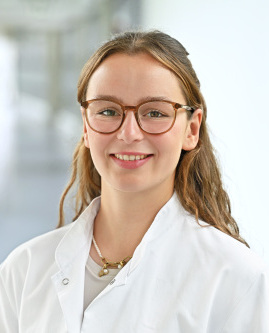
Master student in Molecular Medicine
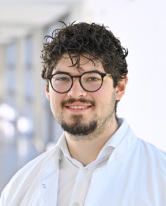
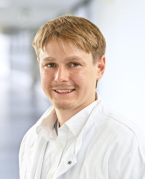
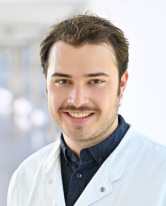
Doctoral candidate (shared supervision with Prof. Ignacio Rubio)