


This project investigates the metabolism of human macrophages to determine how it influences inflammatory processes and the immune response to infections, with the aim of facilitating clinical translation. Macrophages isolated from blood are activated with immune signals, and changes in processes such as glycolysis are tracked to assess their impact on cell behavior, while skin biopsies and blood from individuals with granulomatous diseases (e.g., aquarium granuloma, granuloma annulare, sarcoidosis) are analyzed in parallel. Laboratory findings are linked to patient samples via a partner biobank to identify characteristic metabolic signatures that define inflammatory states in human diseases.
Past and current projects
Metabolic programming of human macrophages in granulomatous skin inflammation, DFG FA849/4-1
Automated 3D Tumor-on-a-Chip Analysis (3DToCA), Thüringer Aufbaubank 2024VFE0048
Automated 3D Tumor-on-a-Chip Analysis
Research consortium within the framework of FTI-Thüringen TECHNOLOGIE


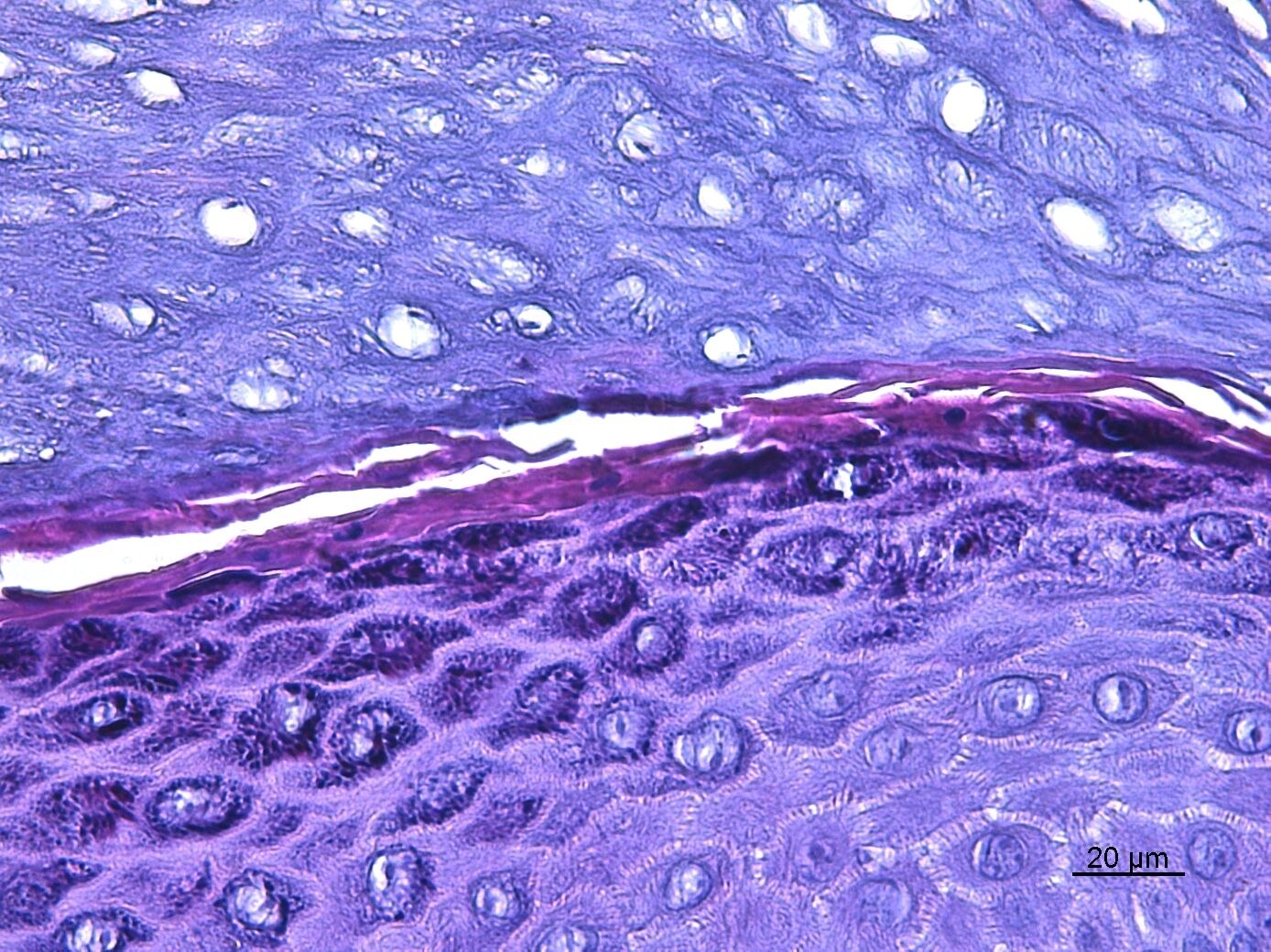
Development of tumor-on-a-chip models
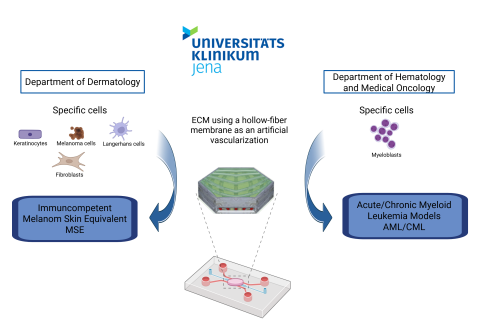
Cancer ranks among the top ten causes of death worldwide and is the second leading cause of death in Germany after cardiovascular disease. Although melanomas account for only about 5% of all skin cancers, they are responsible for more than 75% of all skin cancer deaths. The major challenge in identifying effective therapies lies in inter- and intratumoral heterogeneity, as well as the development of resistance mechanisms against the therapeutic agents used. Against this backdrop in particular, the development of innovative methods for the rapid and individualized assessment of new therapeutic agents is of great importance. To improve and investigate therapeutic approaches for the treatment of tumors, the project aims to establish an immunocompetent 3D skin model for malignant melanoma. This model will be integrated into a microfluidic on-chip application and analyzed online using optical methods.
Development of innovative biocidal nanoparticles for use in plastics engineering (CAP-BNP), BMBF, 03INT505CC
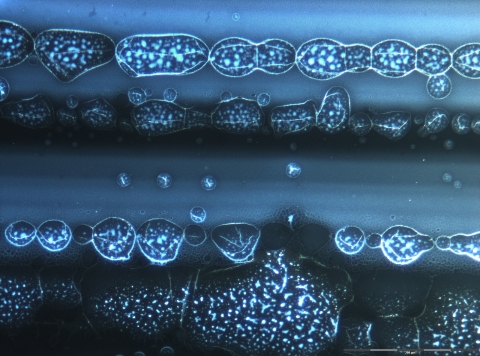
Plastics are processed in very large quantities for packaging, technical components, and medical applications. To suppress bacterial growth or prevent it in subsequent clinical applications, novel biocidal particles that act near the surface are to be added to the plastic. Suitable materials for this purpose include, for example, nanoparticles based on transition metal oxides (e.g., tungsten), which can either be compounded into the plastic or applied via coating. The use of novel nanoscale active substances is intended to produce a significantly prolonged antibacterial effect on plastic surfaces.
InVitroWund - Development of a practical, standardized in vitro testing method for evaluating the efficacy of wound healing products on artificial human skin. ZIM des BMWi, 16KN077227
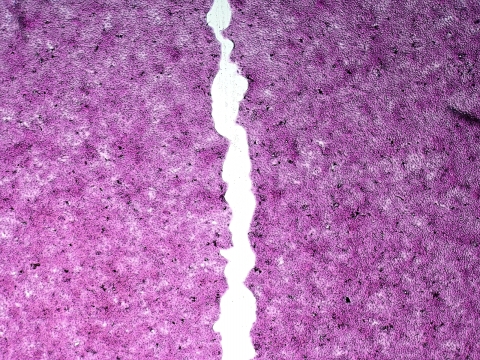
There is currently a lack of comparable clinical data to assess the efficacy of wound healing products containing antimicrobial components. For liquid wound treatment products, in vitro efficacy data are typically collected using suspension assays, e.g., in accordance with DIN EN 13727 and DIN EN 13624, to demonstrate efficacy, followed by animal testing (pigs or mice). However, there is no recognized, commercially available, practical in vitro testing method that can evaluate both the antimicrobial efficacy and the influence of wound healing preparations on the wound healing process. As part of the collaborative project, a standardized in vitro model on artificial human skin is to be developed that can be used worldwide for testing these products, thereby offering an effective and cost-efficient alternative to animal testing and clinical trials.
nanoCARE4skin - Innovative nanomaterials for the delivery of pharmacologically active natural products (and their derivatives) for the treatment of dermatitis. 2019 FGR 0095
This interdisciplinary early-career research group focuses on the application of innovatively formulated natural compounds and their derivatives for the treatment of chronic inflammatory skin conditions, such as atopic dermatitis and psoriasis. The natural substances are characterized with regard to their anti-inflammatory and anti-inflammatory mechanisms of action and precisely encapsulated in nanomaterials according to their physicochemical properties. Pharmaceutical testing is conducted within the framework of the 3R concept (Reduction, Replacement, Refinement), initially on newly developed in vitro tissue models and subsequently in animal models. Thus, the “nanoCARE4skin” project aims to contribute to a better understanding of the effects of natural substances using sustainable manufacturing concepts and methods, and to provide a new therapeutic approach for the treatment of chronic inflammatory skin diseases.
Medical procedure for the minimally invasive removal of tattoos (Reha Reform – Tattoos). ZIM des BMWI, 16KN054130
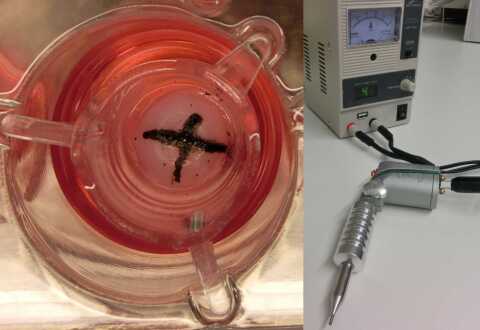
Tattoo removal using a high-energy laser is time-consuming, expensive, and often extremely painful. In addition, there are health risks, as the pigments accumulate in the lymph nodes and could potentially cause cancer and/or autoimmune diseases. Furthermore, burns can occur as a result of the laser treatment. The goal of the project is therefore to develop a medical device that uses high-frequency (HF) technology to enable tattoo removal. This device is intended to increase the effectiveness of tattoo removal and support subsequent treatment.
Collaborative project Thüringer Applikationsplattform für homogene Polysaccharidchemie (TAP) - Upscaling of Aminocellulose for Biosensor and Cosmetic Applications, Subproject 2 – Biological Characterization of Aminocelluloses, BMBF, 03WKP16B
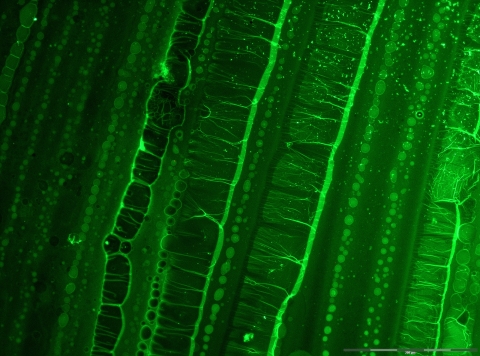
This collaborative project focuses on the recycling of known cellulose solvents and the development of new solvents that can be used for the homogeneous modification of cellulose. An important class of products that can only be produced with defined properties under homogeneous reaction conditions are biologically active aminocelluloses that adhere well to surfaces. Aminocelluloses produced in this way with a defined property profile are to be incorporated into cosmetic formulations, which could lead to marketable products such as shampoos or lotions. This requires novel analytical methods to determine biocompatibility and biofunctionality, e.g., the hemostatic effect of the homogeneously produced derivatives. In a second line of application, the research focuses on the structure-forming potential of the homogeneously synthesized aminocelluloses, with the aim of utilizing their good surface affinity for coating commercial molded parts, such as extraction columns, which are used in biotechnology.
Wachstumskern J-1013 – Collaborative project 4: Antimicrobial coatings. BMBF (PTJ), 03WKBRAC
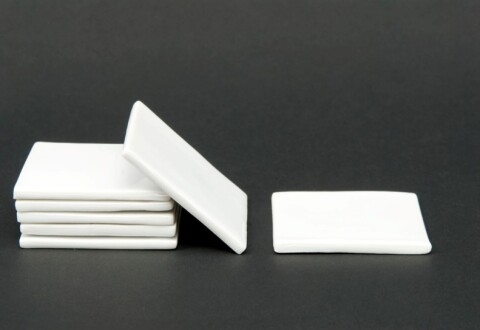
The goal of the project is to develop coating concepts for creating permanent antimicrobial layers on a wide variety of substrates. This is intended to open up new applications for textiles based on gas-phase-deposited nanofilms, enabling the creation of customized antimicrobial layers on textile surfaces.
„DermaWAID“ - Development of dermatologically tested skincare products based on dye woad Isatis tinctoria L. Thüringer Aufbaubank, 2010VF0024/2010FE9084
Dye woad was already used as a medicinal plant in ancient times, and its oils were utilized for their skin-care properties. To date, there is no scientifically substantiated evidence regarding the dermatological efficacy of woad. The DermaWAID project is therefore working on characterizing the biological properties of woad for the development of new products. In particular, the investigation of its antibacterial and antifungal efficacy, as well as its antioxidant potential, is of great interest.
Development of a 3D model for identifying microbial virulence factors and evaluating suitable treatment methods. BMWi (AiF), KF3071902LW3
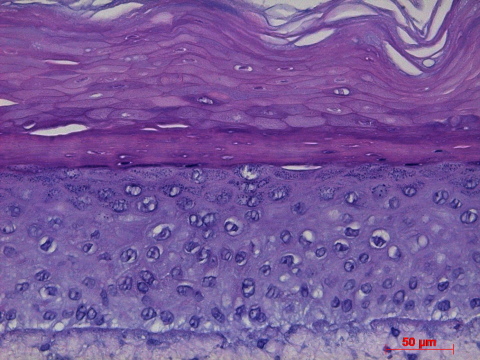
Das Anliegen dieses Projektes ist es, ein geeignetes 3D-Modell zur Identifizierung von mikrobiellen Pathogenitätsfaktoren und zur Evaluierung von Behandlungsmethoden zu entwickeln. Eine herabgesetzte Immunabwehr, Diabetes mellitus und andere Hauterkrankungen können Hautinfektionen mit Bakterien, Hefen und Dermatophyten begünstigen. Da die Behandlungskosten hoch und die Erfolgsaussichten nicht immer befriedigend sind, ist es von Interesse, bestehende Methoden auf ihre Anwendbarkeit zu testen und neu entwickelte Therapiemöglichkeiten zu evaluieren.
Antimicrobial functionalization of ceramic and glass surfaces, and the development and evaluation of a screening test to determine antimicrobial efficacy. BMWi (AiF), KF307190CR4
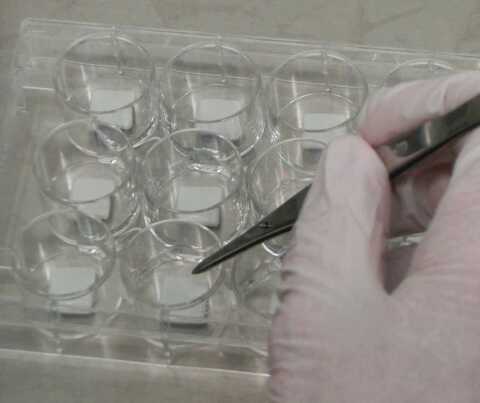
Das Ziel des Projektes ist die Entwicklung von Beschichtungen zur Erzeugung von permanenten antimikrobiellen Schichten auf unterschiedlichsten Substraten zur Erschließung neuer Einsatzfelder für keramische Erzeugnisse und Glasmaterialien. Um die Effektivität verschiedener Beschichtungen gegen unterschiedliche Keime parallel testen zu können, soll auf der Grundlage von Standardtestverfahren ein Screening-Test entwickelt werden, der verlässlich und kostengünstig die Beurteilung der antimikrobiellen Wirksamkeit von funktionalisierten Keramik- und Glasoberflächen ermöglicht.
Polyelectrolyte layers on textile materials as rechargeable reservoirs for cosmetic and pharmaceutical active ingredients. IGF-Vorhaben 18532 BG
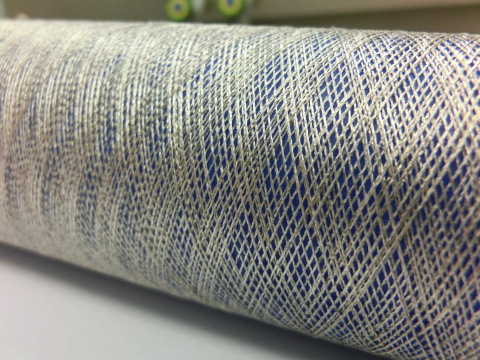
The goal of the project is to establish the scientific foundations for the production of textile materials with a sustained-release effect, which, depending on their coating and loading, can be used both in the cosmetics sector and as medical textiles, such as wound dressings. The finishing of textile-based substrates and products with various treatments that impart new or improved functional properties is of great economic importance to the textile industry, as this approach enables the creation of high-priced products with significant added value.