Zur Startseite Zur Hauptnavigation Zum Inhalt Zur Sitemap
+A-
ENDE
  menu
Institut für Allgemeinmedizin
  menu
  • Homepage
  • Team
  • Research areas
  • Research projects
    • pallCompare
  • Publications
  • Main menu
    • Patients & Relatives
    • Research
    • Teaching and study
    • Doctors & Referrers
    • Clinics & Institutes
    • Careers
    • University Hospital
  • Homepage
  • Team
  • Research areas
  • Research projects
    • pallCompare
  • Publications
Homepage / Research projects

Research projects

A

AVENIR

AVENIR – Improving care for sepsis patients: Analysis of healthcare pathways, experiences, and needs of patients with and after sepsis

Funding Period: 09/2022 – 02/2026
Funding Code: 01VSF21031
Funding body: Innovationsfonds

Study Objective

Sepsis is the leading cause of death from infectious diseases, accounting for around 20% of all deaths worldwide. As it can occur alongside any underlying disease and often presents with non-specific initial symptoms, its emergency treatment poses an interdisciplinary and cross-sectoral challenge. Any delay in hospital admission, diagnosis and guideline-based acute therapy is associated with an increased risk of death in hospital, which in Germany is higher than in other industrialised nations. One in three sepsis survivors experiences new cognitive, psychological or physical complications for which there are currently no specific treatment or aftercare programmes.

The AVENIR project aims to improve sepsis care by gaining a better understanding of patient pathways, as well as their subjective experiences and needs throughout the entire care pathway during and after sepsis. Based on this, concrete recommendations for organising care will be developed, as well as patient information materials, with close patient involvement.


Subprojects of the Institute of General Practice

Subproject A: Claims data analysis

This retrospective cohort study uses Germany-wide data on hospitalisations for sepsis between 2016 and 2020, provided by the Scientific Institute of the AOK (WIdO) for insured persons with AOK insurance. Data on the selected study population is available for one year before and two years after the study.

In our subproject, we analyse in detail: (1) the pathway to inpatient care for patients with community-acquired sepsis; and (2) the care of sepsis survivors after discharge from hospital. In each case, defined care indicators and care costs are recorded over specified time periods.


Subproject C: Provider perspective – qualitative survey

A qualitative survey will be conducted using guided expert interviews and interdisciplinary and interprofessional focus groups to record care pathways and experiences from the provider perspective. Healthcare professionals involved in the preclinical, inpatient, and post-hospital treatment of sepsis patients, such as emergency medical technicians, nurses, therapists, and physicians, will be interviewed. The questions to be clarified in this subproject are: (1) What challenges, best practice examples and deficits exist in acute and long-term care after sepsis, particularly during transitions between sectors? (2) What factors influence the detection and adequate care of sepsis? What contributes to early detection and what to delayed detection? (3) To what extent can concrete optimisation proposals for care with and after sepsis be derived from the results?

Project Team

  • PD Dr. rer. pol./habil. med. A. Freytag
  • Dr. rer. nat. B. Ditscheid
  • M.Sc. Lea Draeger
  • Dr. rer. pol. Fabian Dutschkus
  • M.Sc. Josephine Storch
  • Prof. Dr. med. J. Bleidorn

Publications

  • Joost F, Rose N, Kimmig A, Ruhnke T, Dröge P, Freytag A, Günster C, Pletz MW, Roesler M, Reuken PA, Schlattmann P, Schmidt K, Stallmach A, Storch J, Reinhart K, Wedekind L, Fleischmann-Struzek C. Long‑term outcomes after intensive care unit‑treated COVID‑19, influenza and respiratory sepsis in 2020 – a comparative, population‑based cohort study Infection (2025). https://doi.org/10.1007/s15010-025-02644-3 
  • Wedekind L, Rose N, Freytag A, Kimmig A, Schlattmann P, Pletz MW, Ruhnke T, Dröge P, Fleischmann-Struzek C. Rehospitalizations for ambulatory care sensitive conditions in sepsis survivors– a nationwide cohort study using health claims data 2016 – 2019. Infection (2025). https://doi.org/10.1007/s15010-025-02606-9 
  • Ruhnke T, Storch J, Freytag Aet al. Transitional care after hospitalization for sepsis in Germany– results from the population-based AVENIR cohort study. Infection (2025). https://doi.org/10.1007/s15010-025-02589-7 
  • Draeger L, Fleischmann-Struzek C, Gehrke-Beck S, Heintze C, Thomas-Rueddel DO, Schmidt K. Barriers and facilitators to optimal sepsis care – a systematized review of healthcare professionals’ perspectives. BMC Health Serv Res25, 591 (2025). https://doi.org/10.1186/s12913-025-12777-8
  • Draeger L, Fleischmann-Struzek C, Bleidorn J, Kannengiesser L, Schmidt K, Apfelbacher C, Matthaeus-Kraemer C. Healthcare professionals’ perspectives on sepsis care pathways—qualitative pilot expert interviews. J Clin Med14, 619 (2025). https://doi.org/10.3390/jcm14020619
  • Fleischmann-Struzek C, Rose N, Ditscheid B, Draeger L, Dröge P, Freytag A, Goldhahn L, Kannengießer L, Kimmig A, Matthäus‑Krämer C, Ruhnke T, Reinhart K, Schlattmann P, Schmidt K,Storch J, Ulbrich R, Ullmann S, Wedekind L, Swart E. Understanding health care pathways of patients with sepsis: protocol of a mixed-methods analysis of health care utilization, experiences, and needs of patients with and after sepsis. BMC Health Serv Res 24, 40 (2024). https://doi.org/10.1186/s12913-023-10509-4


Results

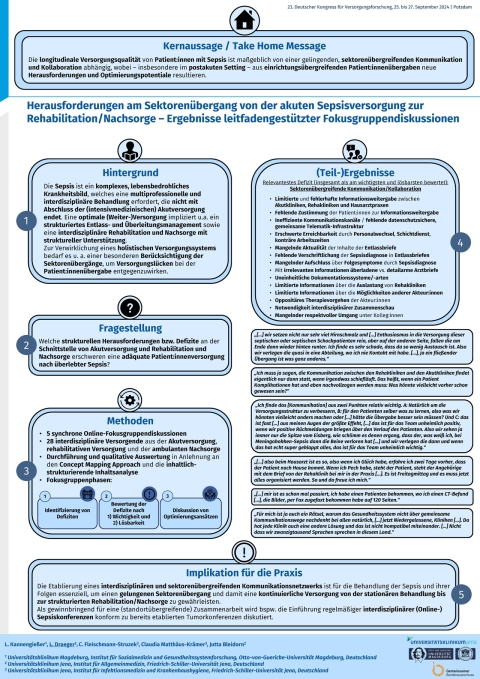
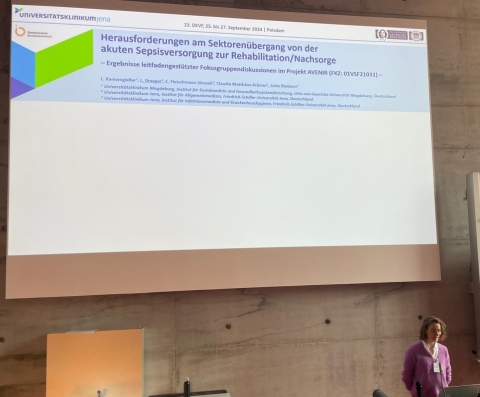
Challenges at the Cross-Sectoral Transition from Acute Sepsis Care to Rehabilitation/Aftercare –Results of Guideline-Based Focus Group Discussions

(DKVF 2024)

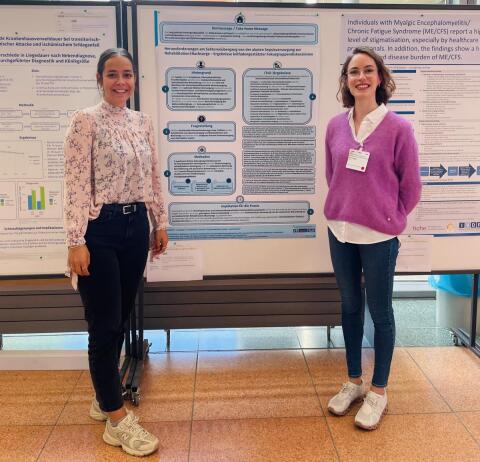
From September 25 to 27, 2024, the 23rd German Congress for Health Services Research took place on the premises of the Potsdam University Campus Griebnitzsee under the motto "Implementation knowledge creates innovative care."Under the category "Results from Health Care Analysis," our research associate Lea Draeger, representing the qualitative AVENIR project team, presented initial findings from an online focus group study in a short presentation and poster session.Together with her project colleague and co-moderator Lena Kannengiesser (Institute of Social Medicine and Health Systems Research, Magdeburg University Hospital), she addressed the following question within the interdisciplinary and cross-sectoral focus group format: Which structural deficits at the interface between acute care and rehabilitation/aftercare hinder adequate patient (follow-up) care after surviving sepsis?The study included neuropsychologists and physicians from specialties such as anesthesiology, intensive care medicine, internal medicine, neurology, physical and rehabilitative medicine, and general practice. To date, little literature exists on the care of sepsis survivors compared to the care of acutely septic patients.One of the numerous findings is that across all focus groups, interdisciplinary and cross-sectoral communication and collaboration among care providers (acute care providers as well as rehabilitation and outpatient aftercare providers) was highlighted as an elementary deficit in the care of sepsis survivors. According to the surveyed experts, this deficit is primarily manifested in limited and/or flawed transfers of (social) medical information and limited exchange or feedback among providers.Identified causes include a lack of data-protection-compliant shared telematics infrastructures and, accordingly, the use of inefficient communication channels (such as fax machines).The establishment of an interdisciplinary and cross-sectoral communication network is therefore described as essential for treating the long-term consequences of sepsis, in order to ensure a successful transition between sectors and thus continuous care from inpatient treatment to structured rehabilitation/aftercare.For instance, the introduction of regular interdisciplinary (online) sepsis conferences, modeled after established tumor boards, is discussed as beneficial for (cross-site) collaboration. The introduction of the electronic patient record is also assessed as very promising for improving the described deficits.A detailed and comprehensive presentation of the results will be available in an upcoming publication.
B

Bot-Pflege

Bot-Pflege

Botulinum toxin injection therapy for post-stroke spasticity (PSS) – at home and in the nursing home

Financing: Own funds

Study Objective

We aim to enable family doctors to treat patients with PSS in accordance with guidelines during home and nursing home visits.

Cooperating with the team at the neurological outpatient clinic at Jena University Hospital (UKJ), we offer family doctors the opportunity to learn and apply botulinum toxin injection therapy for patients with PSS at the UKJ botulinum toxin outpatient clinic.


Internship content:

  • Indications and contraindications for treatment with botulinum toxin
  • Preparations, application, and dosage
  • Localization and selection of injection sites
  • Injection schedules for individual patients

The internships take place on selected dates in the morning on Monday, Tuesday, Wednesday and Friday and are confirmed with a certificate.


If you are interested, please contact for any questions or to arrange an observation appointment.


Support in application for family doctors´ patients

  • Neurological hotline
  • Online exchange of experiences with family doctors and the neurology team on regular basis
  • Patient education and documentation (link)
    • Patient information
    • Therapy documentation Documentation of patient therapy
    • Overview of botulinum toxin preparations
    • For further information: Treatment concept with botulinum toxin for spasticity therapy in practices and care facilities

The IfA is accompanying and evaluating the project. We are recording feasibility, possible hurdles and acceptance in the reality of care during nursing home visits. A final publication is planned.

Projektteam

Team Institute of General Practice and Family Medicine: Prof. Jutta Bleidorn, Dr. Paul Jung, Markus Puschmann, Liliana Rost

Team Neurological Outpatient Clinic: OA Dr. Albrecht Günther, PD Dr. Florian Rakers, Dr. Milan Stojiljkovic, Sabine Winter

D

DIAMANT-SD

DIAMANT-SD:

Thyroid diagnostics in outpatient care


Funding period: 04/2025-03/2028
Funding code: 01VSF24050
Funding body: Innovationsfonds  

Study Objective

The DEGAM guideline „Erhöhter TSH-Wert in der Hausarztpraxis“ includes recommendations that explicitly call for the avoidance of overdiagnosis: in the case of elevated TSH levels, no measurement of fT3 should be performed, and ultrasound examination of the thyroid gland is also not indicated. However, this knowledge has not yet been sufficiently translated into practice: around one third of laboratory tests for monitoring thyroid disease are not performed in accordance with the guidelines, and ultrasound examinations carried out too early lead to unnecessary follow-up examinations and treatments.

The aim of the DIAMANT-SD project is to develop and assess the feasibility of an intervention providing decision-making aids for thyroid-specific laboratory tests and ultrasounds. The so-called “Diagnostic Box” is intended to equip doctors and patients with tools to assess the necessity and risks of diagnostic tests with greater certainty. The Diagnostic Box aims to help reduce the use of unnecessary diagnostics. The project proceeds as follows:

Development of a Diagnostic Box: With the involvement of general practitioners, specialist physicians, patients, and citizens, a Diagnostic Box will be developed. The Diagnostic Box contains: (1) training on thyroid diagnostics, overdiagnosis and risk communication, (2) informational materials for patients on thyroid-related laboratory tests and ultrasound, (3) the arriba

  1. tool for risk assessment and communication regarding thyroid ultrasound, and (4) peer comparison feedback on laboratory tests and ultrasound.
  2. Feasibility Study: The impact of the Diagnostic Box on healthcare delivery will be estimated in a cluster-randomised study to measure the success of the intervention. Practices that play a significant role in primary care will be included. The feasibility evaluation (recruitment, randomisation, intervention, follow-up assessments) serves to prepare for a possible subsequent intervention study.
  3. Long-term Implementation Strategies: Strategies for the sustainable integration of the intervention into medical practice will be developed.

The project will be funded with €1.5 million over three years and has started in April 2025.

Subprojects of the Institute of General Practice

Feasibility study

  • Piloting a randomized study at the level of medical practices

Evaluation

  • Exploratory analysis of efficacy based on the pilot study
    • Can the intervention lead to a reduction in the utilization of diagnostic tests?
    • How can this be measured reliably?
  • Piloting the health economic evaluation

Development of implementation strategies

  • Presentation of the healthcare situation of patients with thyroid diseases using statutory health insurance (SHI) routine data
    • Presentation of care pathways using sequence analysis
    • Analysis of patient groups with similar care needs and patterns using sequence analysis
  • Modeling and analysis of the transferability of the diagnostic box into standard care

Project Team

  • Prof. Dr. Verena Vogt
  • Meik Hildebrandt, M.Sc.
  • Kristina Söhl, MPH

Cooperation Partners

  • Institute of General Practice, University Hospital Erlangen: Dr. phil. Susann Hueber, Dr. med. Lisette Warkentin, and Prof. Dr. Thomas Kuehlein (Consortium Lead)
  • Faculty of Medicine Carl Gustav Carus, Department of General Practice, Technische Universitaet Dresden: Dr. Dipl.-Soz. Karen Voigt
  •  MPH, Dr. Jeannine Schuebel
  • GWQ ServicePlus AG, Duesseldorf
  • Association of Statutory Health Insurance Physicians of Thuringia (KVT), Weimar

Literatur

[1] Schübel J, Voigt K, Uebel T. Erhöhter TSH-Wert in der Hausarztpraxis: S2k-Leitlinie: Deutsche Gesellschaft für Allgemeinmedizin und Familienmedizin e.V; 2023. https://www.degam.de/leitlinie-s2k-053-046.

[2] Hueber S, Biermann V, Tomandl J, Warkentin L, Schedlbauer A, Tauchmann H, Klemperer D, Lehmann M, Donnachie E, Kühlein T. Consequences of early thyroid ultrasound on subsequent tests, morbidity and costs: an explorative analysis of routine health data from German ambulatory care. BMJ Open. 2023;13(3):e059016. DOI:10.1136/bmjopen-2021-059016

[3] Hildebrandt M, Pioch C, Dammertz L, Ihle P, Nothacker M, Schneider U, Swart E, Busse R, Vogt V. Quantifying Low-Value Care in Germany: An Observational Study Using Statutory Health Insurance Data From 2018 to 2021. Value in Health. 2024. https://doi.org/10.1016/j.jval.2024.10.3852 .

DIVA

DIVA - Digital networking in conservative ophthalmology

Funding period: 07/2025 - 12/2028 (42 months)
Funding code: 01NVF24316
Funding body: Gemeinsamer Bundesausschuss Innovationsausschuss
 

Study Objective

In Thuringia, a federal state of Germany, up to 54 percent of people with type 1 or type 2 diabetes mellitus who are covered by statutory health insurance do not receive the recommended ophthalmological screening (diabetic retinopathy screening) for the early detection of diabetic retinal disease. In economically depraved regions in particular, there is a shortfall in care, which exposes those affected to an increased risk of undetected and progressive retinal damage.

The primary aim of the DIVA project is to increase the screening rate for diabetic retinopathy in underserved regions of Thuringia by means of a new form of healthcare delivery (‘Neue Versorgungsform’, NVF). Through telemedical examination of the ocular fundus, pathological retinal changes can be detected at an early stage in order to prevent severe disease progression and make more efficient use of ophthalmological resources.

The project will be funded with €6.2 million over three and a half years and has started in summer 2025. If successfully implemented, telemedicine-supported retinal examinations could be incorporated into routine care in the long term and established as a model for further telemedicine applications.

Subprojects of the Institute of General Practice

The introduction of the new form of care (NVF) is being evaluated within the framework of an accompanying scientific study by the Quantitative Health Services Research working group of the Institute of General Practice. The evaluation covers the following key areas:

  • Screening rates: Does the introduction of the NVF lead to a higher rate of fundus screening examinations among statutorily insured individuals with diabetes mellitus in underserved regions of Thuringia?
  • Impact on ophthalmological capacities: Does the NVF relieve ophthalmic practices and create capacity for other necessary treatments?
  • Implementation in practice: How effectively can the NVF be integrated into existing healthcare structures?
  • Participant satisfaction: How do patients and healthcare professionals rate the new form of care?
  • Cost-effectiveness: Is the NVF economically viable compared to conventional ophthalmic care?

Project Team

  • Prof. Dr. Verena Vogt
  • Richard Schmidt
  • Dr. rer. nat. Robby Markwart
  • Dr. rer. medic. Sarah Salomo

Consortium Lead

Association of Statutory Health Insurance Physicians of Thuringia (KV Thuringia)

Cooperation Partners

  • Universitätsklinikum Jena, Institut für Allgemeinmedizin
  • BARMER
  • DAK-Gesundheit
  • Techniker Krankenkasse

Cooperating Health Insurance Companies

  • AOK PLUS
  • KKH
  • BKK Landesverband Mitte

E

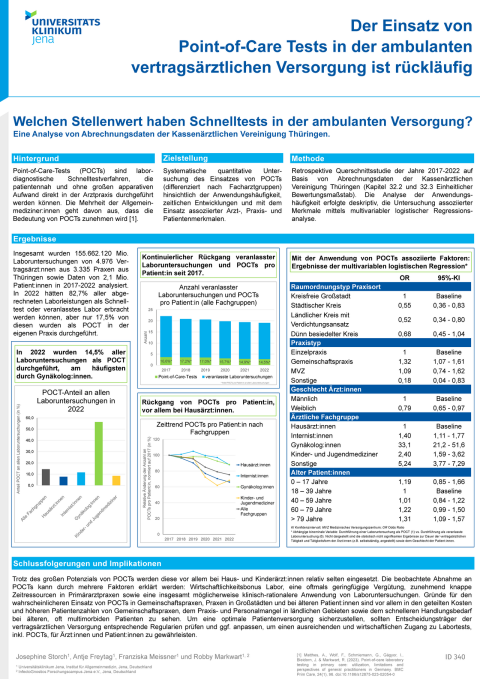
EPoC - Einsatz von Point-of-Care-Tests in der ambulanten Versorgung

EPoC - Utilization of Point-of-Care-Tests in outpatient care

Funding Period: 10/2022 – 03/2024
Funding Body:    Zentralinstitut für die kassenärztliche Versorgung in der Bundesrepublik Deutschland (Zi) – Zi Funding Health
                            Serviece Research 2021

Study Objective

Point-of-care tests (POCTs), also known as rapid tests, are laboratory tests that can be performed in a medical outpatient practice without the need for extensive equipment. They usually deliver results within 30 minutes. Prominent examples include rapid SARS-CoV-2 tests (also known as “coronavirus rapid tests”), urine test strips and rapid pregnancy tests.

The EPoC project aims to systematically analyse the use of POCTs in outpatient care provided by statutory health practitioners. In particular, we want to investigate:

  • Which POCTs are frequently used? Which groups of physicians use them (e.g. general practitioners, gynaecologists or paediatricians)?
  • How has the use of POCTs developed in recent years, and what impact has the SARS-CoV-2 pandemic had?
  • Are there differences in the frequency of POCT use according to the characteristics of the medical practice characteristics (e.g. solo practice, group practice, or medical care centre)?
  • Does the location of the medical outpatient practice (rural or urban) influence the frequency of POCT use?

Understanding the current situation regarding POCT use in outpatient care in depth is important for identifying possible over- or underuse and informing targeted activities to improve care.


Methods

The planned study is a retrospective, longitudinal, observational study (2016–2021). It is based on outpatient physician billing data (VDX data) from the Thuringia Association of Statutory Health Insurance Physicians, in accordance with Section 295 of the German Social Code V.

The data is transferred to the Institute of General Practice and Family Medicine in a pseudonymised form. This means that any information that could be used to identify physicians or patients is not transmitted. The Thuringian Ministry of Labour, Social Affairs, Health, Women and Family has approved the transfer of this data for research purposes (approval for the transfer of social data for use in research in accordance with Section 75 of the Social Code X).

Project Team

  • Dr. rer. nat. Robby Markwart (Project Manager)
  • PD Dr. rer. pol./habil. med. Antje Freytag (Co-Project Manager)
  • M.Sc. Josephine Storch (Research Associate)

Project Partner

Kassenärztliche Vereinigung Thüringen

Publications

Trade journals:

  • Markwart R, Storch J, Bleidorn J, Freytag A. Utilisation and trends of laboratory testing and point-of-care testing in primary care in Germany: an analysis of claims data. BMJ Open 2024;14:e093780. doi:10.1136/bmjopen-2024-093780

Conference:

  • Storch J, Freytag A, Markwart R. Schnelltests in der hausärztlichen Versorgung: Eine Analyse von Abrechnungsdaten der Kassenärztlichen Vereinigung Thüringen (Vortrag). 57. Kongress der Deutschen Gesellschaft für Allgemeinmedizin und Familienmedizin. 28.09.-30.09.2023; Berlin.  

Ergebnisse

Der Einsatz von Point-of-Care Tests in der ambulanten vertragsärztlichen Versorgung ist rückläufig

EPoC Poster

24. Deutschen Kongress für Versorgungsforschung (DKVF) am 22.-24.09.2024

P

pallCompare

 pallCompare: Monitor for Hospice and Palliative Care

The pallCompare project is developing a reporting system on the utilization, quality, and costs of hospice and palliative care in Germany, comparing different regions. The aim is to provide relevant and valid reporting metrics  as a basis for information and decision-making for the further development of palliative care structures.

Funding: G-BA Innovationsfonds (FKZ 01VSF19026)

Project Duration: 11/2020 – 10/2024.

Click here to access the pallCompare Monitor for Hospice and Palliative Care:  

pallCompare Monitor Hospice and Palliativ Care– bifg

Further information about the project can be found in our flyer and under Projekt Content.

Contact
Project management pallCompare

PD Dr. rer. pol./habil. med. Antje Freytag

Institute of Gerneral Practice and Family Medicine, University Hospital Jena

Bachstraße 18
07743 Jena
Tel.: 03641/9-395811
Fax: 03641/9-395802


News
Project Content
Project partners

Data portal for hospice and palliative care
Publications

The study was registered in the German Clinical Trials Registry (DRKS) under the number DRKS00024133 (https://www.drks.de/drks_web/ID=DRKS00024133)

Teaching Program “Evidence-based Patient Consultation and Treatment” (PEBB)

Teaching Program “Evidence-based Patient Consultation and Treatment”

Funding: Strategy and Innovation Fund of the Free State of Thuringia

Evidence-based consultation and treatment are fundamental medical skills that are gaining increasing importance against the backdrop of a constantly growing flood of medical information and the development towards individualized medicine. Therefore, we have developed a teaching format in which the principles and application of evidence-based medicine (EBM) are conveyed in an understandable, practice-oriented, and applicable way to both students and practicing colleagues.

In short teaching video units, relevant contents of EBM are illustrated in the everyday practice of the young general practitioner Dr. Pebb. Seminars, for example within the Practical Year (PJ) and the Winter School, offer opportunities for reflection and practice of the practical application.


Project Team:
Dr. med. Luise Farr (Physician in training)
Prof. Dr. med. Jutta Bleidorn (Institute Director)
Nadine Aicha Sibari and Sabrina Laura Kliese (Scientific Assistants) as well as further staff of the institute

Within the scope of the project, 6 teaching videos in German were developed on the following topics:

  • Introduction to Evidence-Based Medicine
  • Who has it, and if so, how many? (incidence, prevalence, predictive values, working in low- and high-incidence settings)
  • To test or not to test? (core questions of diagnostics, pre-test probability, test quality, post-test probability, consequences of diagnostics)
  • Guidelines – the navigation in daily practice? (goals, origin, development and labeling of guidelines, guideline application in practice, obligations, and limitations)
  • Cognitive bias (internal evidence and cognitive bias, type 1 and type 2 thinking, strategies to reduce cognitive bias, dealing with bias-associated errors)
  • Risk communication (structured risk communication with ARRIBA, numbers in risk communication, absolute and relative risk and risk reduction, mortality and survival rates, lead time and overdiagnosis bias, number needed to treat and number needed to harm, tips and tools for risk communication)

You can find the videos on the German page.


Collaboration and Contact

PEBB aims to be a building block to meet the demands of the revised NKLM for imparting more scientific competence in medical education by implementing evidence-based medicine content across the curriculum. We are always interested in exchange and cooperation with other departments and teaching practices.

Furthermore, exchange takes place with other German universities as well as the EBM network.

All videos are copyright protected. If you are interested in using the videos for teaching or further education purposes, please contact us directly.


We welcome your interest:

T

TransDiag

TransDiag 

Diagnostic innovations on the path to market maturity: technology transfer from development to successful implementation

Project duration: 01.09.2025 – 31.08.2030
Funding code: 13GW0830
TransDiag is funded by the German Federal Ministry of Education and Research as part of the InfectoGnostics Research Campus Jena

The number of new diagnostic methods for diagnosing pathogens and antimicrobial resistances is continuously increasing. However, many of these developments have not yet become established in routine diagnostics. Reasons for this include the lack of involvement of potential users during the design and development phase, an unrealistic assessment of clinical needs and market potential, as well as the neglect of regulatory and structural conditions of the healthcare system.

Aim of the project TranDiag is the continuous and structured support to all projects and partners of the InfectoGnostics Research Campus for the development and transfer of the campus technologies into medical care.

TransDiag supports the development and transfer activities of the projects on four levels: (i) systematic clinical needs and potential analyses, (ii) interdisciplinary dialogues and networks with relevant partners from research, industry, and the healthcare system, (iii) planning and conducting studies (e.g., feasibility and acceptance studies, diagnostic studies, clinical studies) as well as (iv) consulting on regulatory and structural requirements in the healthcare system.

Project team

Prof. Dr. med. Jutta Bleidorn (Director Institute of General Medicine, University Hospital Jena)

Anni Matthes, M.Sc. (project management)

Dr. rer. nat. Bettina Stieber

Dr. rer. nat. Ann-Sophie Mägdefrau

Dr. rer. nat. Robby Markwart

Contact

Anni Matthes, M.Sc.

E-Mail:  

Publications

  • Mägdefrau A-S, Kathner-Schaffert C, Matthes A, Bleidorn J, Markwart R. The Impact of Point-of-Care Testing for Group A Streptococcal Pharyngitis on Antibiotic Prescribing and Patient Health Outcomes in Outpatient Care: A Systematic Review and Meta-analysis of Randomized Controlled Trials, Open Forum Infectious Diseases, Volume 12, Issue 7, July 2025, ofaf407, https://doi.org/10.1093/ofid/ofaf407
  • Markwart R, Storch J, Bleidorn J, Freytag A. Utilisation and trends of laboratory testing and point-of-care testing in primary care in Germany: an analysis of claims data. BMJ Open 2024;14:e093780. doi:10.1136/bmjopen-2024-093780
  • Markwart R, Lehmann LS, Krause M, Jung P, Rost L, Doepfmer S, Kuempel L, Kuschick D, Toutaoui KJ, Heintze C, Bleidorn J, Wolf F. Utilization and consequences of CRP point-of-care-testing in primary care practices: a real-world multicentre observational study with 1,740 patient cases in Germany. BJGP Open. 2024. doi: 10.3399/BJGPO.2024.0120.Link
  • Rödenbeck M, Ayobami O, Eckmanns T, Pletz TW, Bleidorn J, Markwart R. Clinical epidemiology and case fatality due to antimicrobial resistance in Germany: a systematic review and meta-analysis, 1 January 2010 to 31 December 2021. Euro Surveill.2023;28(20):pii=2200672. Link
  • Matthes A, Wolf F, Wilde E, Bleidorn J, Markwart R. Point-of-care measurement of C-reactive protein promotes de-escalation of treatment decisions and strengthens the perceived clinical confidence of physicians in out-of-hours outpatient emergency medical services. BMJ Open.2023;13:e069453. doi: 10.1136/bmjopen-2022-069453. Link
  • Matthes A, Wolf F, Schmiemann G, Gágyor I, Bleidorn J, Markwart R. Point‑of‑care laboratory testing in primary care: utilization, limitations and perspectives of general practitioners in Germany. BMC Primary Care. doi:10.1186/s12875-023-02054-0. Link
  • Wolf F, Matthes A, Markwart R, Bleidorn J. Perspectives of physicians and medical assistants on the implementation of NAAT-based point-of-care testing for SARS-CoV-2 in primary care in Germany.  Evid. Fortbild. Qual. Gesundh. wesen (ZEFQ).2022. doi: 10.1016/j.zefq.2022.09.006 Link
  • Matthes A, Bleidorn J, Markwart R. Research on point-of-care tests in outpatient care in Germany: A scoping review and definition of relevant endpoints in evaluation studies. Z Evid Fortbild Qual Gesundhwes. 2022;30:1865-9217. doi: 10.1016/j.zefq.2022.06.002 Link
  • Matthes A, Wolf F, Bleidorn J, Markwart R. “It Was Very Comforting to Find Out Right Away.” – Patient Perspectives on Point-of-Care Molecular SARS-CoV-2 Testing in Primary Care. Patient Prefer Adherence.2022;16:2031-2039. doi: 10.2147/PPA.S372366 Link

U

UFO

UFO - Recording of undesirable treatment outcomes after surgery from the patient's perspective

Funding period: 01/2025-06/2028 (42 months)
Funding code: 01VSF24018
Funding body: Gemeinsamer Bundesausschuss Innovationsausschuss


Study Objective

The aim of UFO is the early detection and long-term reduction of postoperative complications. To this end, the project team is developing a survey instrument that systematically captures non-desirable treatment outcomes after surgery (UFOs) using patient-reported outcome measures (PROMs). This will enable:

  • a comparison and benchmarking of postoperative outcomes between outpatient and inpatient surgeries.
  • the early detection of postoperative complications, enabling targeted follow-up care and early intervention.


Subgroups of the Institute of General Medicine

Routine Data Analysis
To support the project, we analyze BARMER claims data with the following objectives:

  • Identifying frequently performed outpatient surgical procedures to facilitate an evidence-based selection of relevant procedures for PROM (Patient-Reported Outcome Measures) assessment.
  • Mapping postoperative complications of the selected procedures via routine administrative data using:
    • ICD-10 codes for complications (e.g., hemorrhages, postoperative infections)
    • ATC codes for analgesic prescriptions (e.g., opioids, anti-inflammatory drugs)
    • Hospital readmissions within 30 to 90 days
    • Secondary surgical interventions indicative of a complication
  • Identifying patient-specific risk factors associated with an increased likelihood of complications.
  • Analyzing regional variations in UFO rates to detect potential differences in healthcare quality and geographic patterns.

Patient Involvement
The perspectives and firsthand experiences of patients undergoing surgical procedures play a central role in the project. Therefore, the initiative is continuously supported by a Patient Advisory Board. During advisory board meetings, researchers and patients collaboratively deliberate on project content, methodological approaches, and findings. For instance, patients provide insight into experienced symptoms of impending complications or share their experiences regarding inpatient and outpatient postoperative care. These insights directly inform the development of the survey instrument.
Patient involvement within the UFO project is integrated into the initiative "Joint Research with Citizens" of the Institute of General Practice and the "Patient Involvement" Working Group of the Center for Health Services Research. Furthermore, in collaboration with general practitioners through the RESPoNsE Teaching and Research Practice Network of the Institute of General Practice, we are exploring how the developed survey instrument can be integrated into postoperative follow-up care.
Would you like to participate in the project as a patient or general practitioner, or do you have feedback for us? Please let us know. Contact:

Projekt team


  • Prof. Dr. Verena Vogt
  • Meik Hildebrand, M.Sc.
  • Anni Matthes, M.Sc.
  • Richard Schmidt
  • Josephine Storch, M.Sc.
  • Prof. Dr. med. J. Bleidorn

Consortium Partner

  • Klinik für Anästhesiologie und Intensivmedizin (KAI), Universitätsklinikum Jena: apl. Prof. Dr. Winfried Meißner (Projektleitung, Konsortialführung)
  • Bundesverband für Ambulantes Operieren e.V. (BAO)
  • BARMER
  • Deutsche Gesellschaft für Anäesthesiologie und Intensivmedizin (DGAI)
  • Deutsche Gesellschaft für Allgemein- und Viszeralchirurgie (DGAV)

Cooperation partner

  • Aktionsbündnis für Patientensicherheit (APS)

W

WATCH

WATCH – Web-Based Telemedicine Approach for Treatment of Post-COVID-19 in Thuringia


Funding period: 07/2023-08/2026
Funding code: 01NVF22114

Study objective

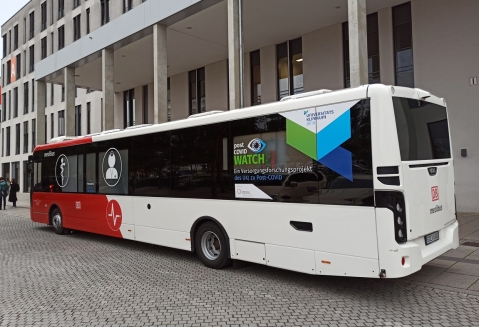
The aim of WATCH is to develop and evaluate a new form of care for post-COVID patients, especially in rural areas, to improve symptoms and enable higher social participation. In a mobile post-COVID outpatient clinic (PoCo bus), patients are examined close to their place of residence, followed by a multimodal telemedical intervention. Over a period of twelve weeks, participants complete training units focusing on cognitive functioning such as concentration and attention (BRAIN module), a program on physical fitness and activity (BODY module) and behavioral therapy (SOUL module). Further information can be found here.

Subprojects of the Institute of General Practice and Family Medicine

Work package: Process evaluation from a physician's perspective

This part of the process evaluation aims to capture the perspective of general practitioners (GPs) regarding the feasibility, benefits and acceptance of the intervention. This will involve both qualitative and quantitative surveys.

At the beginning of the intervention phase, participating GPs will be surveyed using semi-structured interviews. These interviews will provide early insights into the project processes, identifying barriers and facilitators for patient inclusion, and enabling adjustments to be made to (communication) processes as the project progresses. The results of the interviews will also be used to develop a questionnaire for the quantitative assessment of satisfaction, feasibility and acceptance. This will be distributed out to all doctors participating in the WATCH project at the end of the intervention period for the final evaluation. The results will be used to prepare for the continuation of the new form of care.

Project team:

Miriam Pfeiffer

Prof. Dr. Jutta Bleidorn

Work package: Health economic evaluation based on health insurance claims data

The health economic evaluation of the new form of care WATCH is an important complement to the evaluation of clinical effectiveness, conducted at Martin Luther University Halle-Wittenberg. It follows the main idea that early, structured interventions can improve the physical, cognitive and psychological symptoms of the study participants, increase the chances of a full recovery and reduce the likelihood of chronicity. The health economic evaluation is based primarily on claims data from three statutory health insurance funds participating in the project and aims to answer the following questions:

(1) Does the intervention reduce healthcare costs?

(2) Does the intervention reduce the number of days of incapacity for work?

The results of the health economic evaluation will provide one important basis for the G-BA's decision on whether to transfer this form of care into standard care.

Project team:

Dr Franziska Meissner

PD Dr Antje Freytag

Updates & Findings

WATCH Bus (Foto: IfA/UKJ)

UKJ Press Release from Nov 12, 2024

"One Year of the Mobile Post-COVID Outpatient Clinic in Thuringia: Initial Findings Available"

Ongoing High Need for Treatment Among Post-COVID Patients


Homepage Publications
Team
Research areas
Research projects